Southern Wimmera and Northeast Pyrenees Water Supply Project (SWNP)
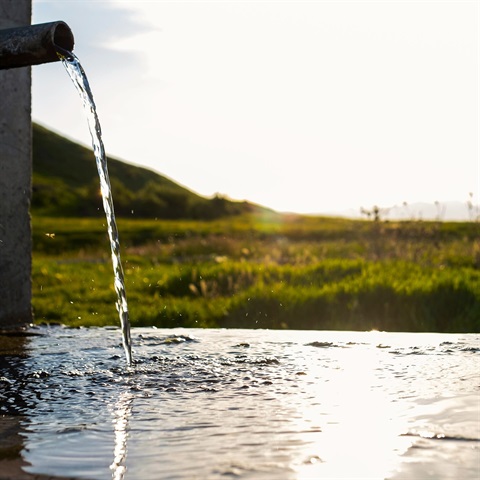
Frequent drought conditions and the impacts of climate change are placing increasing pressure on agriculture, tourism, the environment, culturally significant waterways, and community wellbeing across the Southern Wimmera and Northeast Pyrenees (SWNP) region.
The Southern Wimmera and Northeast Pyrenees Water Supply Project is designed to address these challenges by delivering a reliable, fit-for-purpose rural water network that supports agricultural productivity, environmental sustainability, cultural outcomes, and community resilience.
Project Overview
The $163.5 million project will deliver a regional, reticulated non-potable water supply and distribution network connected to the existing Grampians Wimmera Mallee Water system.
The proposed network includes:
- Approximately 1,582 kilometres of pipeline
- The potential to connect around 2,500 rural properties on an opt-in basis
- Ability to connect up to nine towns across the project area
The project will provide long-term water security for households, agriculture, industry and emergency response activities. It will also support landholders currently reliant on saline groundwater or those without access to a secure water supply.
Benefits for Communities, Agriculture and the Environment
The project is expected to deliver significant economic, environmental, social and cultural benefits, including:
- $150 million in economic benefits, primarily through increased agricultural productivity
- $24.5 million in environmental benefits through improved waterway health and ecosystem outcomes
- $26.9 million in social benefits for local communities
- Enhanced opportunities for Traditional Owners to access and manage cultural water
- A Cost Benefit Ratio of 1.47
- Creation of approximately 254 jobs during construction
- Improved regional resilience to drought
- Greater water availability to support bushfire preparedness and response
Building a More Resilient Future
By improving water security across the region, the project will strengthen local economies, support farming and horticultural enterprises, protect valuable environmental and cultural assets, and help communities adapt to a changing climate.
The project is being delivered through a partnership between Pyrenees Shire Council, Northern Grampians Shire Council, Central Goldfields Shire Council, Grampians Wimmera Mallee Water, and Central Highlands Water.
The Process

Frequently Asked Questions
What is the Southern Wimmera and Northeast Pyrenees Water Supply Project?
The Southern Wimmera and Northeast Pyrenees Water Supply Project (SWNP) is a proposed regional water infrastructure project that would deliver a reliable, reticulated non-potable water supply network across parts of the Southern Wimmera and Northeast Pyrenees region.
The project aims to provide an alternative to increasingly unreliable local water sources, helping improve drought resilience, agricultural productivity and regional economic growth.
Further details can be found on the GWM Water website.
Why is this project needed?
Water security is one of the most significant challenges facing our region.
Many farmers, businesses and communities rely on rainfall-dependent sources such as dams and catchments, which are becoming less reliable due to drought and changing climate conditions. It would also provide long-term water security to the environment, Traditional Owners and communities and landholders currently reliant on saline groundwater or without access to a secure town water supply.
What is non-potable water?
Non-potable water is water that is not intended for drinking but can be used for:
- Livestock watering
- Crop spraying
- Horticulture
- Agricultural production
- Industrial uses
- Recreation reserves and public open spaces
- Household laundries and toilets but not food preparation or drinking
- Watering gardens
Any potable (drinking) water requirements would continue to be supplied through existing drinking water systems.
Who will benefit from the project?
There are more than 2500 rural landowners and up to nine towns in the project area, including:
- Farmers and agricultural enterprises, including wineries
- Local communities
- Sporting and recreation facilities
- The broader regional economy
What area will the project service?
The proposed network would service parts of the Pyrenees, Central Goldfields and Northern Grampians Shire.
A map of the project area can be found on the GWM website.
Will landholders be required to connect?
No. Participation would be voluntary on an opt in basis.
How much will it cost?
Capital cost of the project is estimated at $163.5 million, with $5 million now required to make the SWNP shovel ready.
GWMWater can be contacted to find out about the cost of connecting your property on 1300 659 961.
Who is funding the project?
The project is seeking support and investment from Victorian and Commonwealth governments.
Advocacy efforts aim to secure funding to progress planning, design and construction.
When will construction begin?
Construction timeframes will depend on funding, planning and approval processes.
A timeline for delivery will be confirmed once project funding and approvals are secured.
Where can I get more information about the project?
Further details about the project including how to lodge expressions of interest to connect to the supply can be found on the GWM Water website.
You can also contact one of the following council representatives.
- Pyrenees Shire Council
Ray Davies
ray.davies@pyrenees.vic.gov.au
- Northern Grampians Shire Council
Rohan Gow
rohan.gow@ngshire.vic.gov.au
- Central Goldfields Shire
Alisha Chadwick
AlishaC@cgoldshire.vic.gov.au
Who do I contact if I want to put in an expression of interest to connect to the proposed pipeline and learn about the costs of a connection?
People interested in a water connection can enquire about the cost involved by contacting GWMWater on 1300 659 961.
Expressions of interest can be lodged with GWMWater here.
What if the water supply comes past my property but I don’t want a connection or to be charged fees?
Once the construction phase of the project is funded, rural landholders will have the opportunity to apply for a connection on an opt in basis.
Only those landholders who apply to have a water connection will be charged fees. Urban property owners will continue to be subject to the fees and charges applied by Central Highlands Water.