Extreme Heat and Heatwaves

Heatwaves are becoming more frequent, more intense and lasting longer. In Australia, extreme heat causes more deaths than any other natural hazard, making it one of the most significant risks to community health and wellbeing.
For rural communities, the impacts of extreme heat can be even greater. Hot weather can affect people, animals, businesses, farms, critical infrastructure and essential services. Heatwaves can also increase the risk of bushfires, power outages and disruptions to everyday life.
By understanding the risks and preparing ahead of time, we can all play a role in building a more resilient community.
Understanding Heatwaves
A heatwave is a period of unusually hot weather that lasts for several days or more. Extended periods of extreme heat place additional stress on the body and can lead to serious health problems, particularly for people who are more vulnerable.
While everyone is affected by heat, some people are at greater risk, including older adults, babies and young children, pregnant women, people living with chronic medical conditions, people taking certain medications, outdoor workers and those who are socially isolated.
The risks can be increased further if you live in a home that is difficult to keep cool, have limited access to transport, or are unable to access emergency information and support during extreme weather events.
Staying Safe During Hot Weather
When temperatures rise, simple actions can make a significant difference to your health and safety.
Drink water regularly throughout the day, even if you do not feel thirsty. Carry water with you when travelling and ensure you have extra supplies available at home, particularly if power outages could affect your water supply.
Try to stay in the coolest part of your home, which is often the south-facing side of the house. Keep blinds and curtains closed during the day, particularly on sun-facing windows, and open windows overnight when temperatures cool down. Air-conditioning is one of the most effective ways to stay cool, but fans, cool showers and damp towels placed around the neck and shoulders can also help lower body temperature.
If possible, avoid being outside during the hottest part of the day, generally between 11am and 3pm. Outdoor activities such as gardening, sport and manual work are safer when completed early in the morning or later in the evening.
If you need to travel or spend time outdoors, seek shade where possible, wear loose-fitting light-coloured clothing and a wide-brimmed hat, and take water with you.
One of the most important heat safety messages is never to leave children, older people or pets in parked vehicles. Temperatures inside a vehicle can rise rapidly within minutes and become life-threatening.
The HEATSAFE Checklist
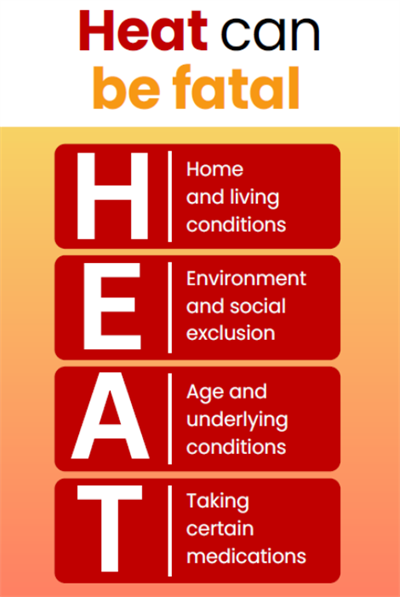
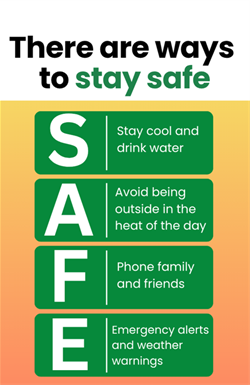
A simple way to remember the key heat safety messages is to think HEATSAFE:
 |
|
H is for Home
Know how you will keep your home cool during hot weather.
E is for Environment
Be aware of weather forecasts and the conditions around you.
A is for Age and Underlying Conditions
Recognise that some people are more vulnerable to heat.
T is for Taking Certain Medications
Talk to your doctor or pharmacist if medication may affect your ability to cope with heat.
|
|
|
S is for Stay Cool and Drink Water
Hydration and cooling strategies are essential.
A is for Avoiding the Heat of the Day
Limit outdoor activities during peak temperatures.
F is for Phone Family and Friends
Stay connected and check on others.
E is for Emergency Alerts
Keep informed through trusted emergency information sources.
|
Know the Signs of Heat-Related Illness
Extreme heat can lead to dehydration, heat exhaustion and heatstroke. If left untreated, heat-related illness can become life-threatening.
Heat exhaustion can develop gradually and may include symptoms such as headaches, dizziness, nausea, muscle cramps, weakness, pale skin and an elevated body temperature. If these symptoms occur, move to a cool place immediately, rest, drink water and use cool water on the skin where possible.
Heatstroke is a medical emergency and can develop rapidly. Warning signs can include hot, dry skin, severe headache, confusion, unusual behaviour, loss of consciousness, convulsions and a sudden rise in body temperature.
If you suspect someone has heatstroke, call 000 immediately and begin cooling the person while waiting for emergency services.
Check on Others
Heatwaves can affect anyone, but some members of the community may need additional support.
Checking in with family, friends, neighbours and people who live alone can make a real difference during extreme heat events. A quick phone call, text message or visit can help identify problems early and ensure people are staying cool and hydrated.
People who are new to the area, older residents, those with health conditions and people who may be socially isolated can be particularly vulnerable during prolonged periods of hot weather.
A strong and connected community is one of the best protections against extreme heat.
Heat and Power Outages
Heatwaves can often coincide with increased demand on the electricity network, leading to power outages.
Without power, air-conditioners, fans, refrigeration and some communication devices may not work. This can make it more difficult to stay cool and safely store food and medications.
Think ahead about how you would cope if the power went out on a very hot day. Consider where you could go to cool down, how you would access information and who may be able to assist if needed.
Having a backup plan is particularly important for people who rely on electrically powered medical equipment or cooling systems.
Building a Heat-Resilient Community
Extreme heat is a growing challenge for Victorian communities, but there is much we can do to reduce its impacts.
Preparing homes, staying connected with neighbours, understanding health risks and planning ahead for hot weather all contribute to a safer and more resilient community. By taking action before extreme heat arrives, we can better protect ourselves, our families and those who may need extra support when temperatures soar.
Stay Informed
Hot weather can increase the risk of bushfires, storms, smoke impacts and service disruptions. Conditions can change quickly, so it is important to stay informed.
Monitor weather forecasts, emergency warnings and local updates throughout the summer period. Listen to ABC Local Radio, follow official emergency services information and download the VicEmergency app to receive alerts and warnings.
Remember that if fire conditions are severe, leaving early and spending time in a safer location may be the best option.
Health Advice and Support
If you are concerned about your health during a heatwave, contact your doctor, pharmacist or Nurse-on-Call on 1300 60 60 24 for health advice.
For life-threatening emergencies, always call 000.
Additional information about heat health, staying safe during heatwaves and preparing for extreme weather events is available at Victorian Department of Health website.